


Total Papers i
20
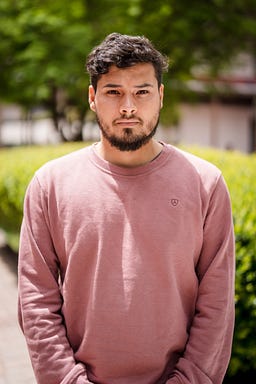
I AM MIGUEL CÁRCAMO
Full Name
Miguel Cárcamo, Prof.Position
Assistant Professor, Departamento de Ingeniería Informática, Universidad de Santiago de ChileAddress
Av. Víctor Jara 3659 (ex Av. Ecuador), Estación Central, ChilePhone
(+56) 2 2718 0940I am an Assistant Professor at the Universidad de Santiago de Chile and an Associate Researcher at the Data Observatory. I hold a Ph.D. in Astronomy and Astrophysics from the University of Manchester (2019-2023), where I developed novel compressed sensing frameworks for Faraday depth reconstruction. My research program encompasses radio interferometry and advanced imaging techniques, cosmic magnetism, high-performance computing, and large-scale data processing for astronomical applications. I am the principal developer of Pyralysis, a Python object-oriented framework designed for big data processing and high-performance computing applications targeting SKA-era data volumes. My work emphasizes end-to-end computational workflows for radio astronomical data, developing software systems that handle the complete processing chain from raw observations through to calibrated, imaged, and validated scientific datasets.
my special expertise
EDUCATION
2019 - 2023
The University of Manchester, UK. Supervisor: Prof. Anna Scaife. Thesis: "Compressive Faraday Imaging for Next-Generation Radio Telescopes." Developed novel compressed sensing frameworks for Faraday depth reconstruction.
2015 - 2016
Universidad de Santiago de Chile. Supervisor: Prof. Fernando Rannou. Thesis: "Interferometric image synthesis through parallel iterative algorithms on multiple GPUs."
2010 - 2016
Universidad de Santiago de Chile. Comprehensive training in computer science, software engineering, and computational methods.
2010 - 2013
Universidad de Santiago de Chile. Foundation in engineering principles and mathematical methods.
work EXPERIENCE
2023 - Present
Universidad de Santiago de Chile. Teaching courses in Operating Systems, Distributed and Parallel Systems, Software Development, and Radio Interferometry. Principal developer of Pyralysis framework for SKA-era data processing.
2022 - Present
Data Observatory. Research in high-performance computing and large-scale data processing for astronomical applications.
2019 - 2022
Universidad de Santiago de Chile. Taught courses in Operating Systems, Software Engineering, and Programming Methods while completing Ph.D. research.
my special expertise
Python Programming
0%Radio Interferometry
0%Compressed Sensing
0%CUDA & Parallel Computing
0%C/C++ Programming
0%Faraday Depth Reconstruction
0%Open source research software
PYthon Radio Astronomy anaLYSis and Image Synthesis. A Python object-oriented framework designed for big data processing and high-performance computing applications targeting SKA-era data volumes.
GitLab repository →caSa pythoN self-calibratiOn frameWork. A Python framework for radio astronomy self-calibration workflows, providing a unified interface to run imagers (tclean, wsclean, gpuvmem, rascil) and self-calibration algorithms in a streamlined workflow.
GitHub repository →GPU-accelerated maximum entropy method for radio interferometric image synthesis. High-performance imaging software leveraging GPU computing for efficient radio astronomy data processing.
GitHub repository →A novel compressed sensing framework for Faraday depth reconstruction. Developed for next-generation radio telescopes to analyze extragalactic magnetic fields using Rotation Measure Synthesis and advanced signal reconstruction techniques.
GitHub repository →Radio astronomy software for interferometric data processing and analysis. Tools and utilities for working with radio interferometric observations and image synthesis.
GitHub repository →Software for simulating radio interferometric visibilities. Tools for generating synthetic interferometric data for testing and validation of radio astronomy imaging algorithms and pipelines.
GitHub repository →Research articles and conference proceedings (auto-synced from NASA ADS)
Last synchronized from NASA ADS: 2026-05-04T11:18:25Z
Scholarly metrics from NASA ADS
Total Papers i
20
Total Citations i
398
h-index i
10
m-index i
0.8333
Lead-author Papers i
6
First-author Papers i
4
FONDECYT NP i
4.4539
Citation Velocity (5y) i
3.4857
Open Access Share i
80.0%
Leadership Citation Ratio i
0.772
International Collaboration Share i
80.0%
Recent Momentum (5y) i
45.33
Flagship Impact Share i
65.83%
In the last 5 years, recent work contributes 30.65% of total citation impact.
total_publications = journal papers + conference papers.lead_author_publications = papers with author position 1 or 2.h-index: largest h such that at least h papers have >= h citations.i10-index: number of papers with >= 10 citations.m-index = h-index / years_since_first_publication.average_citations_per_paper = total_citations / total_publications.median_citations_per_paper: median citation count across all included papers.citation_velocity.citations_per_effective_year uses papers from the last 5 years and computes sum(citations) / sum(max(1, current_year - publication_year)).open_access_share_percent is computed from ADS property flags.collaboration.avg_coauthors_per_paper uses distinct co-authors per paper, excluding Miguel.country_collaboration.* is inferred from affiliation text and should be interpreted as collaboration geography, not nationality.leadership.leadership_impact_ratio compares citations per paper in lead roles (author position 1-2) vs supporting roles.momentum.momentum_score = average of 5-year paper share and 5-year citation share (0-100 scale).impact_concentration.top5_citation_share_percent reports how much total citation impact is concentrated in top-5 papers.FONDECYT-style NP (ANID GE Astronomía y Astrofísica):
current_year - 5 up to current_year (inclusive).c_i = citations / max(1, current_year - pub_year).l_i by author position: 1-2: 1.00, 3: 0.90, 4: 0.70, 5: 0.50, 6: 0.30, 7+: 0.20.s_i = l_i * sqrt(1 + c_i).s_i.P = sum(s_i) over top 10.NP = min(1.0 + 1.7 * P^0.25, 5.0).Country is inferred from affiliation text in ADS metadata, not author nationality.
Courses and academic instruction
usach-modern.
Research institutions and key collaborators
Current and former students
academic expertise, service, and recognition
Advanced imaging techniques and radio interferometric data processing for next-generation radio telescopes, including SKA-era applications.
Development of novel compressed sensing frameworks for Faraday depth reconstruction and cosmic magnetism studies.
CUDA, OpenMP, MPI, and parallel computing solutions for large-scale astronomical data processing. Principal developer of Pyralysis framework.
Research on extragalactic magnetic fields using Rotation Measure Synthesis and advanced signal reconstruction techniques.
End-to-end computational workflows for radio astronomical data, from raw observations to calibrated, imaged, and validated datasets.
Teaching Operating Systems, Distributed Systems, Software Development, and Radio Interferometry at Universidad de Santiago de Chile.
funding, invitations, service, and awards
latest news
January 15, 2024
Welcome to my academic blog where I'll share updates about my research, teaching, and work in radio astronomy and computer...
Get in touch with me
Please Feel free to get in Touch Anytime, whether for Work Inquiries or to just say Hello!
ADDRESS
Av. Víctor Jara 3659, Departamento de Ingeniería Informática, Office 203
CONTACT INFO
miguel.carcamo@usach.cl
(+56) 2 2718 0940
WORKING HOURS
Daily 9am to 17pm (Not available on weekends)