


Total Papers i
21
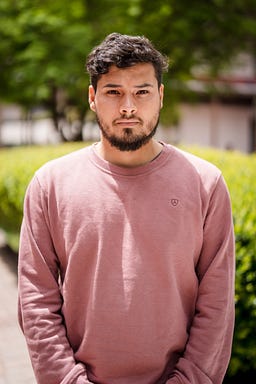
I AM MIGUEL CÁRCAMO
Full Name
Miguel Cárcamo, Prof.Position
Assistant Professor, Departamento de Ingeniería Informática, Universidad de Santiago de ChileAddress
Av. Víctor Jara 3659 (ex Av. Ecuador), Estación Central, ChilePhone
(+56) 2 2718 0940I am an Assistant Professor at the Universidad de Santiago de Chile and an Associate Researcher at the Data Observatory. I hold a Ph.D. in Astronomy and Astrophysics from the University of Manchester (2019-2023), where I developed novel compressed sensing frameworks for Faraday depth reconstruction. My research program encompasses radio interferometry and advanced imaging techniques, cosmic magnetism, high-performance computing, and large-scale data processing for astronomical applications. I am the principal developer of Pyralysis, a Python object-oriented framework designed for big data processing and high-performance computing applications targeting SKA-era data volumes. My work emphasizes end-to-end computational workflows for radio astronomical data, developing software systems that handle the complete processing chain from raw observations through to calibrated, imaged, and validated scientific datasets.
my special expertise
EDUCATION
2019 - 2023
The University of Manchester, UK. Supervisor: Prof. Anna Scaife. Thesis: "Compressive Faraday Imaging for Next-Generation Radio Telescopes." Developed novel compressed sensing frameworks for Faraday depth reconstruction.
2015 - 2016
Universidad de Santiago de Chile. Supervisor: Prof. Fernando Rannou. Thesis: "Interferometric image synthesis through parallel iterative algorithms on multiple GPUs."
2010 - 2016
Universidad de Santiago de Chile. Comprehensive training in computer science, software engineering, and computational methods.
2010 - 2013
Universidad de Santiago de Chile. Foundation in engineering principles and mathematical methods.
work EXPERIENCE
2023 - Present
Universidad de Santiago de Chile. Teaching courses in Operating Systems, Distributed and Parallel Systems, Software Development, and Radio Interferometry. Principal developer of Pyralysis framework for SKA-era data processing.
2022 - Present
Data Observatory. Research in high-performance computing and large-scale data processing for astronomical applications.
2019 - 2022
Universidad de Santiago de Chile. Taught courses in Operating Systems, Software Engineering, and Programming Methods while completing Ph.D. research.
my special expertise
Python Programming
0%Radio Interferometry
0%Compressed Sensing
0%CUDA & Parallel Computing
0%C/C++ Programming
0%Faraday Depth Reconstruction
0%Open source research software
PYthon Radio Astronomy anaLYSis and Image Synthesis. A Python object-oriented framework designed for big data processing and high-performance computing applications targeting SKA-era data volumes.
GitLab repository →caSa pythoN self-calibratiOn frameWork. A Python framework for radio astronomy self-calibration workflows, providing a unified interface to run imagers (tclean, wsclean, gpuvmem, rascil) and self-calibration algorithms in a streamlined workflow.
GitHub repository →GPU-accelerated maximum entropy method for radio interferometric image synthesis. High-performance imaging software leveraging GPU computing for efficient radio astronomy data processing.
GitHub repository →A novel compressed sensing framework for Faraday depth reconstruction. Developed for next-generation radio telescopes to analyze extragalactic magnetic fields using Rotation Measure Synthesis and advanced signal reconstruction techniques.
GitHub repository →Radio astronomy software for interferometric data processing and analysis. Tools and utilities for working with radio interferometric observations and image synthesis.
GitHub repository →Software for simulating radio interferometric visibilities. Tools for generating synthetic interferometric data for testing and validation of radio astronomy imaging algorithms and pipelines.
GitHub repository →SCIENTIFIC FOCUS AREAS
My research connects radio astronomy, computational imaging, and high-performance computing. Use the tabs below to explore each focus area — methods, science goals, and selected publications.
Magnetic fields are everywhere in space, even where we cannot see them directly. Earth’s field turns a compass needle; the Sun’s field drives flares and the solar wind; on larger scales, galaxies and the gas between them are threaded by fields that influence how stars form and how energy is transported.
The open questions are ambitious: how strong are those fields, how are they arranged across the Milky Way and beyond, and do they help or hold back the birth of stars? Polarised radio light is one of our best witnesses—light that has been nudged by magnetised gas along the way, leaving a trace we can decode. With the SKA, that trace will be readable on a scale we have never had before.
I develop methods to recover magnetic-field structure from polarised radio data, using techniques such as Faraday tomography and modern computing so that large surveys remain practical. The goal is reliable, reproducible tools that scientists can use on SKA-era data volumes.
Community. Associate member of the SKAO Magnetism Science Working Group (Universidad de Santiago de Chile).
Protoplanetary discs are flat rings of gas and dust around young stars. That is, the places where planets and moons are born. Picture our own Solar System not long after it formed: the Sun surrounded by a broad disc of material that would later become the planets, asteroids, and moons we know today. A central question is simple to state but hard to answer: under what conditions do planets actually form, and how does a disc go from that early stage to a full planetary system?
Researchers also ask how growing planets interact with the disc, whether moons can form around them, and why some discs show gaps, spirals, or bright spots that change over time. Radio telescopes help by showing dust and gas, and sometimes the glow of material still falling onto a young planet.
I analyse radio data from telescopes such as ALMA and the VLA on young discs and environments around forming planets, with emphasis on variability, what drives the radio emission, and how the way we build images affects the science. Much of this work is done with the Millennium Nucleus YEMS (Young Exoplanets and their Moons) and collaborators in Chile and abroad.
Radio interferometry builds a telescope from many smaller dishes separated by large distances. In the right arrangement, that array can behave like a single antenna with an aperture as wide as the greatest spacing between elements. The familiar rule applies: larger aperture, finer detail on the sky. That is why ALMA, the VLA, and future arrays such as the SKA are laid out over kilometres or continents instead of being one solid dish.
Each pair of antennas measures only a fragment of the spatial frequencies needed for an image. We never observe the full set, and noise is always present. Mathematically, many different sky brightness patterns can match the same data. In other words, the reconstruction problem does not have a unique solution unless we add sensible assumptions and quantify what remains uncertain. Much of the field is about making that choice explicit so we do not mistake software artefacts for astrophysics.
I work on imaging algorithms and software that turn raw interferometric visibilities into maps suitable for publication, with emphasis on speed, reproducibility, and checks along the way. I lead development of Pyralysis, a framework aimed at large surveys such as the SKA, and supervise student projects on reconstruction methods and GPU computing.
You already use compression every day. An MP3 keeps the music without storing every millisecond of sound at full detail; a JPEG shrinks a photo because much of the information is redundant. Compressed sensing asks a related question for science: if the sky, or the magnetic structure along our line of sight, can be described with far fewer numbers than a naive map would suggest, can we still reconstruct it from the limited measurements a telescope actually gives us?
Radio astronomy is a natural place for this. We never sample the sky completely, and noise is always there. The honest question is not only “can we fill in the gaps?” but “when should we trust what comes out, and when are we pushing the data too hard?” That tension shows up clearly in Faraday tomography, where we try to peel apart magnetised gas at different depths using polarised radio waves.
I write reconstruction methods that exploit structure in the data instead of pretending we measured everything. Much of my work targets Faraday depth recovery for polarimetric surveys, with an eye on surveys that will only grow with the SKA. CS-ROMER is the main tool I have built along this line. It recovers magneto-ionic emission using compressed sensing, has been tested on real survey designs, and is meant to be used, not only described on paper.
Research articles and conference proceedings (auto-synced from NASA ADS)
Last synchronized from NASA ADS: 2026-06-22T14:50:26Z
Scholarly metrics from NASA ADS
Total Papers i
21
Total Citations i
405
h-index i
10
m-index i
0.8333
Lead-author Papers i
7
First-author Papers i
4
FONDECYT NP i
4.4846
Citation Velocity (5y) i
3.4722
Open Access Share i
80.95%
Leadership Citation Ratio i
0.656
International Collaboration Share i
80.95%
Recent Momentum (5y) i
46.38
Flagship Impact Share i
65.68%
In the last 5 years, recent work contributes 30.86% of total citation impact.
total_publications = journal papers + conference papers.lead_author_publications = papers with author position 1 or 2.h-index: largest h such that at least h papers have >= h citations.i10-index: number of papers with >= 10 citations.m-index = h-index / years_since_first_publication.average_citations_per_paper = total_citations / total_publications.median_citations_per_paper: median citation count across all included papers.citation_velocity.citations_per_effective_year uses papers from the last 5 years and computes sum(citations) / sum(max(1, current_year - publication_year)).open_access_share_percent is computed from ADS property flags.collaboration.avg_coauthors_per_paper uses distinct co-authors per paper, excluding Miguel.country_collaboration.* is inferred from affiliation text and should be interpreted as collaboration geography, not nationality.leadership.leadership_impact_ratio compares citations per paper in lead roles (author position 1-2) vs supporting roles.momentum.momentum_score = average of 5-year paper share and 5-year citation share (0-100 scale).impact_concentration.top5_citation_share_percent reports how much total citation impact is concentrated in top-5 papers.FONDECYT-style NP (ANID GE Astronomía y Astrofísica):
current_year - 5 up to current_year (inclusive).c_i = citations / max(1, current_year - pub_year).l_i by author position: 1-2: 1.00, 3: 0.90, 4: 0.70, 5: 0.50, 6: 0.30, 7+: 0.20.s_i = l_i * sqrt(1 + c_i).s_i.P = sum(s_i) over top 10.NP = min(1.0 + 1.7 * P^0.25, 5.0).Country is inferred from affiliation text in ADS metadata, not author nationality.
Courses and academic instruction
usach-modern.
Research institutions and key collaborators
Current and former students
academic service and recognition
funding, invitations, service, and awards
latest news
January 15, 2024
Welcome to my academic blog where I'll share updates about my research, teaching, and work in radio astronomy and computer...
Get in touch with me
Please Feel free to get in Touch Anytime, whether for Work Inquiries or to just say Hello!
ADDRESS
Av. Víctor Jara 3659, Departamento de Ingeniería Informática, Office 203
CONTACT INFO
miguel.carcamo@usach.cl
(+56) 2 2718 0940
WORKING HOURS
Daily 9am to 17pm (Not available on weekends)